Hydrogen Combustion Engines: The Future of Sports Cars
The performance car world in 2026 stands at one of the most consequential crossroads in its history. On one side sits the electric revolution — silent, instantaneous, breathtakingly fast, and increasingly dominant in the headlines. On the other, the internal combustion engine fights for its cultural and commercial survival, constrained by tightening emissions legislation across Europe, Asia, and North America.
But between these two poles, a third technology is emerging with a quiet confidence that deserves far more attention than it has received. The hydrogen internal combustion engine — known in engineering circles as H2-ICE — is not a compromise between electrification and combustion. It is, AutoTickers argues, the most compelling vision of the performance car's future that currently exists: clean enough to satisfy regulators, mechanical enough to satisfy purists, and exciting enough to define a new golden era for sports cars.
What Is a Hydrogen Combustion Engine — And How Is It Different From a Fuel Cell?
Before making the case for H2-ICE technology, it is essential to distinguish it from hydrogen fuel cell technology — a distinction that much of the mainstream automotive coverage fails to make clearly.
A hydrogen fuel cell vehicle (FCEV), like the Toyota Mirai or Hyundai NEXO, converts hydrogen into electricity through a chemical reaction and uses that electricity to power an electric motor. The driving experience is essentially identical to a battery electric vehicle — smooth, silent, and disconnected from any mechanical powertrain sensation.
A hydrogen internal combustion engine, by contrast, burns hydrogen directly in a modified conventional engine. The fundamental architecture — pistons, crankshaft, camshafts, intake, exhaust — remains. The fuel changes. Hydrogen replaces petrol or diesel as the combustion medium, and what exits the exhaust is overwhelmingly water vapour rather than carbon dioxide.
The engineering implications of this distinction are profound for sports car enthusiasts. An H2-ICE engine revs. It breathes. It makes noise — a different noise from a petrol engine, higher in pitch and with a distinctive character, but unquestionably mechanical and visceral. It can be paired with a manual gearbox. It can be turbocharged. It can be made to sound extraordinary.
This is not electrification with extra steps. This is the internal combustion engine reimagined for a zero-carbon future — and the performance potential is staggering.
The Toyota GR Corolla H2: Proof of Concept From the Motorsport Trenches
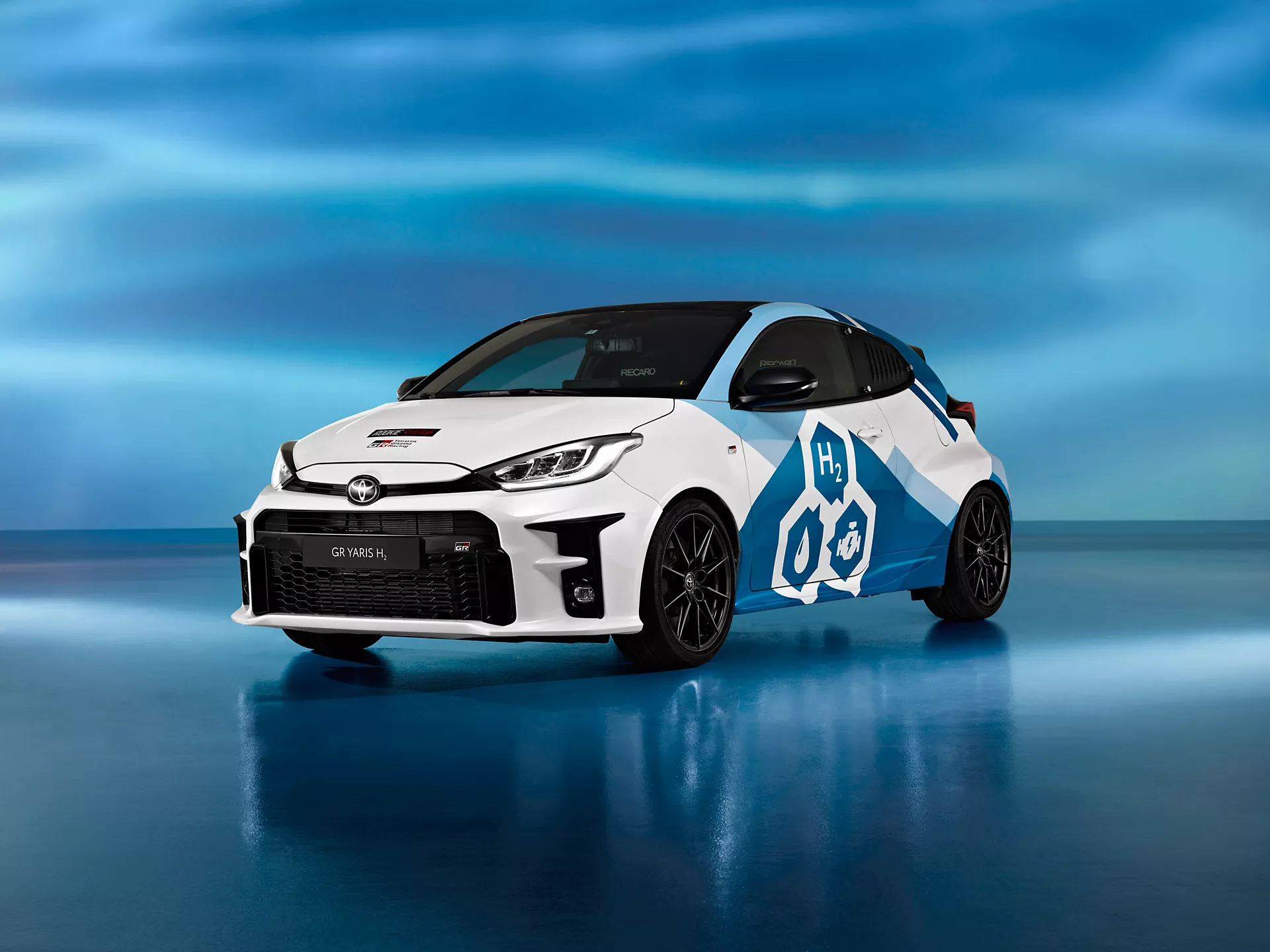
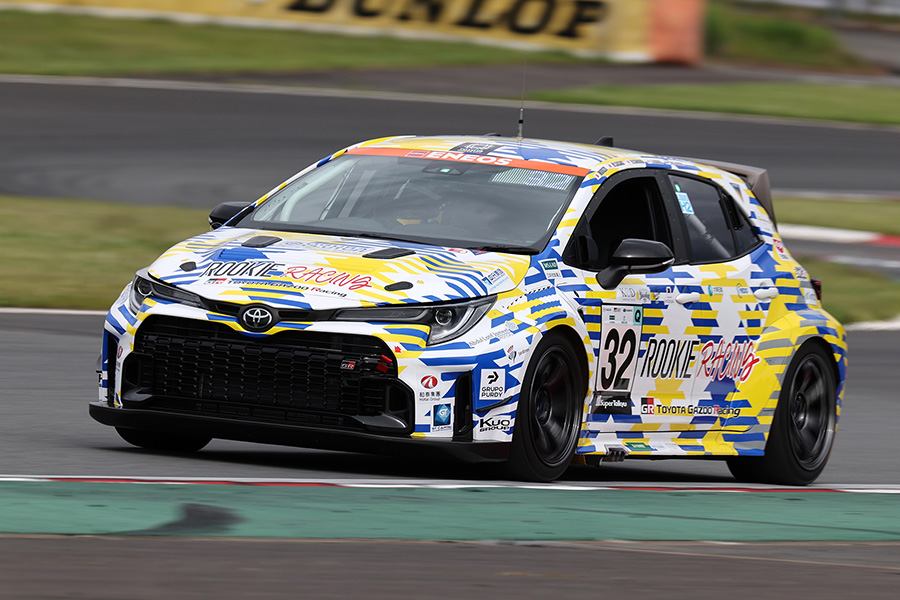
Toyota has been the most vocal and most committed mainstream manufacturer in the development of hydrogen combustion technology for performance applications. Since 2021, Toyota has been racing a hydrogen-combustion-powered GR Corolla-based vehicle in the Super Taikyu endurance racing series in Japan — and the results have been genuinely revelatory.
By 2025 and into 2026, Toyota's hydrogen combustion racing programme had demonstrated several critical milestones that directly challenge the assumption that H2-ICE is merely an academic exercise:
- The hydrogen GR engine produces competitive power outputs that have continued to improve with each racing season, now approaching the performance envelope of equivalent turbocharged petrol units.
- Refuelling times for hydrogen have been dramatically reduced through advances in high-pressure hydrogen storage and dispensing technology, now approaching practicality for both motorsport and road use.
- The acoustic character of the hydrogen engine — described by Toyota engineers as a higher-frequency, cleaner version of the petrol engine's sound — has been received enthusiastically by both drivers and spectators.
- Exhaust emissions are predominantly water vapour, with trace nitrogen oxide emissions that remain manageable through standard catalytic treatment.
Toyota's commitment to this technology is not academic. The manufacturer has publicly stated that hydrogen combustion remains a central pillar of its multi-pathway approach to carbon neutrality — and its motorsport investment is the research and development laboratory for future road car application.
BMW's Hydrogen Vision: The M Performance Connection
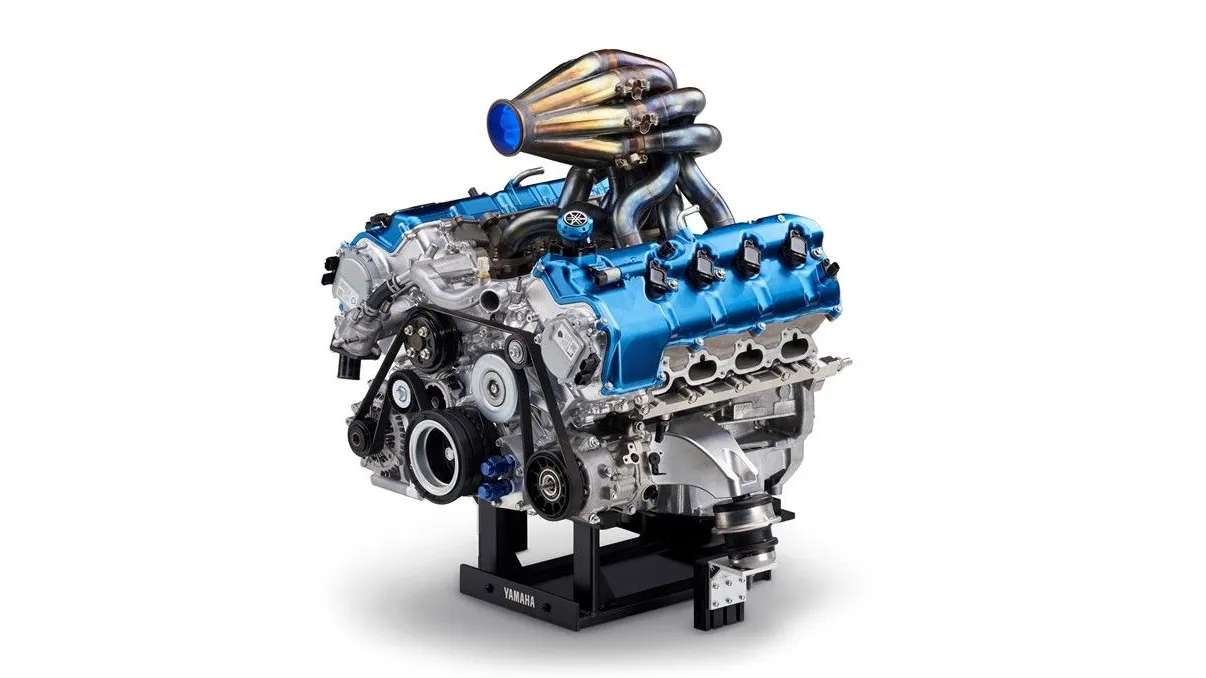
BMW has maintained a longer and deeper engagement with hydrogen technology than almost any other premium manufacturer, stretching back to the hydrogen-combustion V12-powered BMW Hydrogen 7 of the mid-2000s. In 2026, BMW's hydrogen strategy has evolved significantly — and the M division's involvement is the detail that matters most to performance car enthusiasts.
BMW M's engineers have been exploring hydrogen combustion adaptation of their inline-six and V8 engine architectures, recognising that the fundamental characteristics of H2-ICE — high energy density per combustion event, extremely fast flame propagation, and wide flammability range — align naturally with the demands of a high-revving performance engine.
Hydrogen's flame speed is approximately eight times faster than petrol's. In practical terms, this means hydrogen combustion engines can achieve more complete and efficient combustion events at higher engine speeds — a characteristic that is directly advantageous for performance applications. An H2-ICE engine has the theoretical potential to deliver a broader, more responsive power band than an equivalent petrol unit, particularly in naturally aspirated configurations where throttle response and high-rpm power delivery are priorities.
BMW has not yet confirmed a production hydrogen combustion performance vehicle, but the engineering development activity within the M division — and BMW's broader hydrogen investment through the iX5 Hydrogen fuel cell programme — signals a manufacturer that is positioning itself carefully for multiple hydrogen futures simultaneously.
The Sound Argument: Why Hydrogen Engines Have a Voice Worth Hearing
One of the most underreported aspects of hydrogen combustion engine technology is its acoustic character — and for sports car enthusiasts, this matters enormously.
Electric vehicles are fast. Increasingly, they are extraordinarily fast. But the overwhelming consensus among driving enthusiasts who have experienced both electric performance cars and their combustion-engined counterparts is that EVs, for all their performance capability, are acoustically sterile. The absence of mechanical sound is not neutrality — it is a removal of one of the most powerful emotional dimensions of the driving experience.
Hydrogen combustion engines do not have this problem. They produce sound. The combustion event in a hydrogen engine is rapid and energetic — hydrogen's stoichiometric flame temperature and combustion speed create an acoustic signature that is distinctly different from petrol, characterised by a sharper, cleaner, higher-frequency note that many engineers and drivers describe as more refined than petrol but equally emotional.
In Toyota's racing programme, the hydrogen GR engine has been described by drivers as possessing a unique voice — lighter and more crystalline than a petrol engine, but unmistakably alive. This is not a simulation. This is not a speaker system playing a recorded engine note through the cabin. This is genuine mechanical combustion producing genuine mechanical sound — and that distinction is fundamental to the sports car experience.
For manufacturers who understand that a sports car must engage all the senses — not merely deliver g-forces and lap times — the acoustic authenticity of H2-ICE is one of its most commercially significant attributes.
Performance Potential: The Numbers That Should Excite Every Enthusiast
The engineering case for hydrogen combustion performance is built on several physical properties of hydrogen that make it an extraordinarily capable combustion fuel when properly managed:
- Energy density by mass: Hydrogen contains approximately 120 megajoules per kilogram of energy — roughly three times the energy density of petrol by weight. While volumetric storage challenges mean this advantage is partially offset in practical applications, it represents a fundamental thermodynamic advantage for power generation.
- Octane equivalent: Hydrogen has a research octane number (RON) equivalent of approximately 130 — significantly higher than premium petrol at 98 RON. This means hydrogen combustion engines can run at substantially higher compression ratios without knock, directly enabling higher thermal efficiency and power output.
- Flame speed: As noted, hydrogen's flame propagation speed is approximately eight times faster than petrol, enabling more complete combustion across a wider engine speed range. This translates to improved throttle response, broader power delivery, and the potential for higher specific power outputs.
- Lean combustion capability: Hydrogen can burn efficiently at air-to-fuel ratios far leaner than petrol — enabling significant improvements in fuel efficiency during part-load conditions while maintaining full-power capability when demanded.
When these properties are combined in a purpose-designed performance engine architecture — with direct injection, variable valve timing, and sophisticated turbocharging or supercharging — the theoretical performance ceiling of a hydrogen combustion sports car engine is not a limitation. It is an invitation.
Yamaha's Extraordinary Hydrogen V8: A Performance Manifesto
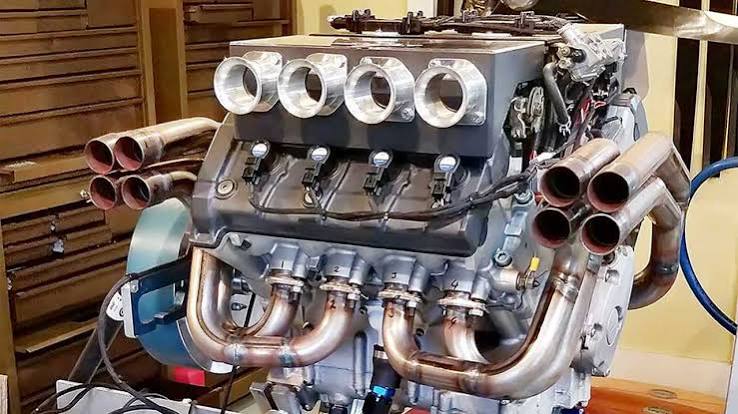
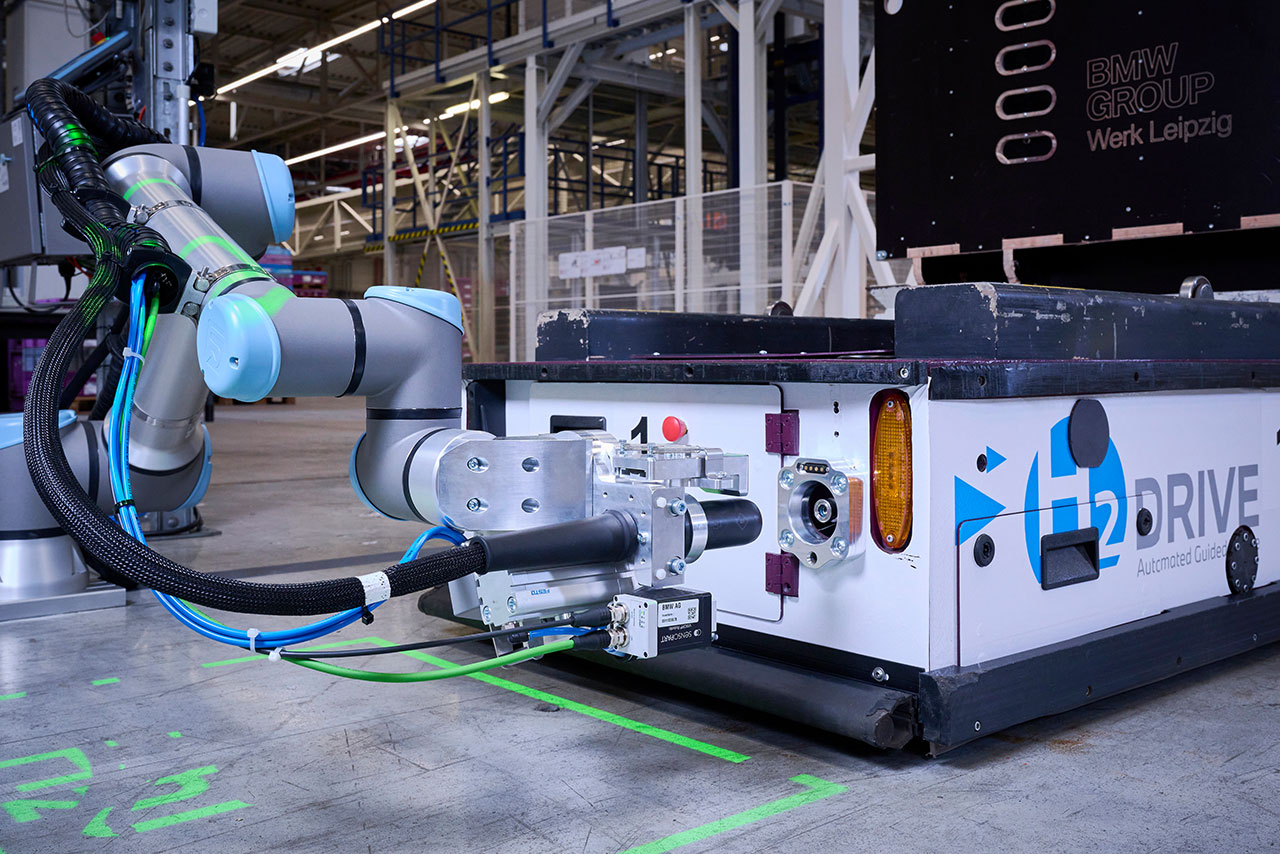
Perhaps the most dramatic proof of hydrogen combustion's performance potential came from Yamaha Motor — a manufacturer with deep roots in both automotive engine development and high-performance motorcycle engineering. Yamaha unveiled a hydrogen-combustion V8 engine concept that produces approximately 450 horsepower with a redline of 9,000 rpm — figures that belong firmly in supercar territory.
The Yamaha hydrogen V8 is a naturally aspirated unit, exploiting hydrogen's high octane equivalent and rapid flame speed to achieve power outputs that would require forced induction in a conventional petrol engine. Its rev characteristics — the way it builds power through the rev range — have been described by engineers involved in its development as more linear and more emotionally engaging than an equivalent petrol V8.
This engine is not a production-ready unit, and Yamaha has not confirmed a vehicle programme around it. But it is one of the most compelling demonstrations that hydrogen combustion is not a technology of compromise — it is a technology of ambition. A naturally aspirated, 9,000-rpm, 450-horsepower hydrogen V8 is not a concession to environmentalism. It is a performance statement of the highest order.
The Infrastructure Challenge: The Honest Assessment
AutoTickers commits to honest, expert journalism — and that means acknowledging the most significant challenge facing hydrogen combustion's road car future: infrastructure.
In 2026, hydrogen refuelling infrastructure remains severely limited in most markets outside Japan and parts of Germany, South Korea, and California. The global hydrogen refuelling station network is a fraction of the size of the petrol station network, and the economics of green hydrogen production — produced through electrolysis powered by renewable energy — remain challenging at scale, though costs have been falling consistently throughout the mid-2020s.
For a sports car — a vehicle that by definition is used for enthusiast driving on specific occasions rather than daily commuting — the infrastructure challenge is less immediately prohibitive than it would be for a family vehicle. Sports car owners are accustomed to planning routes, travelling to specific locations for track days and driving events, and accepting certain inconveniences in exchange for a superior driving experience. A hydrogen sports car, in a world where hydrogen refuelling is available at motorsport venues, specialist filling stations, and in performance-oriented regions, is a more practicable proposition than the infrastructure numbers alone might suggest.
The trajectory is also important. Green hydrogen production costs have fallen by over 60% since 2020, and the International Energy Agency projects continued cost reduction through the late 2020s and into the 2030s. Several major motorsport series are actively evaluating hydrogen combustion as a successor fuel to current petrol-based formulas. The infrastructure will follow the demand — and the sports car sector represents exactly the kind of premium, enthusiast-driven demand that hydrogen infrastructure investment tends to follow first.
Motorsport as the Proving Ground: Why H2-ICE Belongs on the Circuit
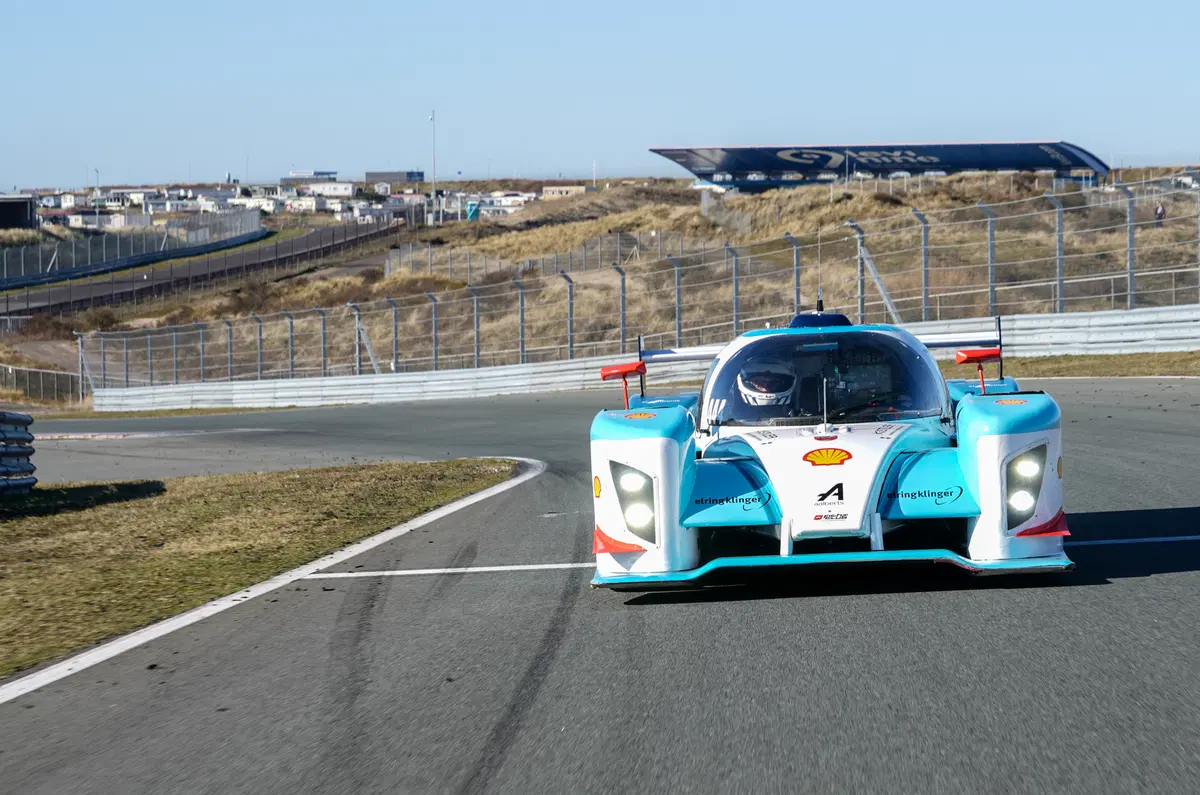
Motorsport has always been the crucible in which future road car technology is forged. The turbocharged engine, aerodynamic downforce, carbon ceramic brakes, semi-slick tyres, traction control, and active suspension all made their debuts in competition before migrating to production vehicles. The pattern is consistent and historically validated.
In 2026, hydrogen combustion technology is following exactly this path. Toyota's Super Taikyu hydrogen programme, Volkswagen Group's internal hydrogen combustion research connected to its motorsport division, and several independent racing series exploring H2-ICE regulations are collectively building the knowledge base, the engineering expertise, and the public awareness that will eventually translate into production sports cars.
The Le Mans 24 Hours — the world's most prestigious endurance race — has been in active discussion about hydrogen combustion regulations for future classes. The ACO (Automobile Club de l'Ouest), which governs Le Mans, has publicly acknowledged hydrogen as part of its long-term regulatory vision. A hydrogen combustion class at Le Mans would not merely be a regulatory footnote — it would be one of the most powerful commercial endorsements in automotive history, placing H2-ICE technology alongside the world's most advanced petrol-powered hypercars in the most demanding motorsport environment on earth.
The Purist Case: Why H2-ICE Preserves What EVs Cannot
At AutoTickers, we have consistently argued — most recently in our article on the manual gearbox's ongoing relevance in 2026 — that the sports car experience is defined by engagement, not merely by performance metrics. The manual gearbox article made the case that driver involvement, mechanical connection, and sensory feedback are not optional extras in a performance car — they are the definition of what a performance car is.
Hydrogen combustion engines make exactly the same argument from a powertrain perspective. They preserve:
- Mechanical complexity — the revving engine, the breathing intake, the exhaust note, the powertrain sensations that make a sports car feel alive rather than merely fast.
- Driver engagement — an H2-ICE engine responds to throttle inputs with the organic, progressive character of combustion rather than the binary, instant torque delivery of an electric motor. It rewards smooth, skilled driving. It communicates.
- Gearbox compatibility — hydrogen combustion engines are fully compatible with manual gearboxes. The H2-ICE sports car of the future can, and should, be available with a six-speed manual — preserving the complete driver engagement package that electric vehicles are constitutionally incapable of delivering.
- Sound — as discussed, the acoustic character of hydrogen combustion is genuine, mechanical, and emotionally significant. It is not a soundtrack played through speakers. It is the voice of an engine doing work — one of the most fundamentally satisfying sounds in the human sensory experience.
- Refuelling familiarity — hydrogen refuelling, while currently limited in availability, takes minutes rather than the hours associated with high-capacity battery charging. For a sports car used on driving events and track days, this operational characteristic aligns far more naturally with the enthusiast usage pattern than battery charging does.
The Manufacturers to Watch: Who Is Leading the H2-ICE Performance Revolution
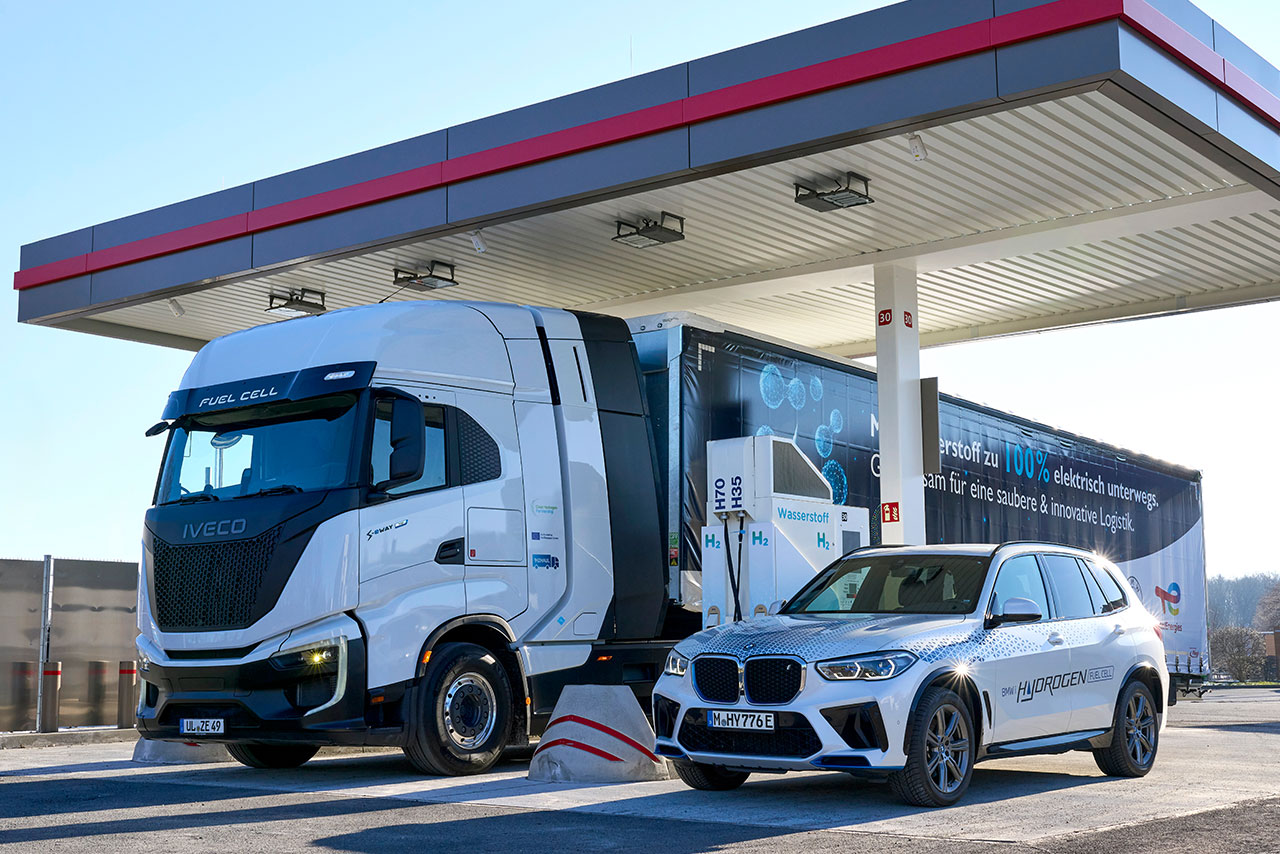
In 2026, the manufacturers most meaningfully invested in hydrogen combustion performance technology are:
- Toyota / Gazoo Racing — the undisputed leader in H2-ICE motorsport development. Toyota's commitment through its GR motorsport division is the most advanced and most transparent hydrogen combustion programme in the industry. The GR hydrogen racing programme is real, competitive, and generating genuine engineering data that will inform future production vehicles.
- BMW M — while less publicly committed to H2-ICE than Toyota, BMW's deep hydrogen expertise and the M division's engineering involvement in performance powertrain research make it one of the most credible potential producers of a hydrogen combustion sports car in the near future.
- Yamaha Motor — the V8 hydrogen engine concept demonstrates that Yamaha's engineering capabilities extend powerfully into the hydrogen combustion performance space. Yamaha's engine manufacturing heritage — it has produced engines for Toyota sports cars including the legendary 2000GT — makes it a potential critical supplier for future H2-ICE performance vehicles.
- Kawasaki Heavy Industries — investing significantly in hydrogen combustion technology across multiple vehicle categories, including performance motorcycles, with learnings that transfer directly to automotive applications.
AutoTickers Verdict: The Sports Car Deserves a Hydrogen Future
The binary debate — electric versus combustion — has dominated automotive discourse for the better part of a decade. It is the wrong question, or at minimum an incomplete one. The real question is not which energy source powers the future sports car. The real question is which energy source powers the future sports car while preserving the mechanical soul, the driver engagement, the sensory richness, and the emotional authenticity that have defined the sports car since its inception.
Battery electric power answers that question with silence, smoothness, and a fundamental disconnection from the mechanical process of propulsion. These are genuine virtues in many contexts — but they are not the virtues of a sports car.
Hydrogen combustion answers the question differently. It says: here is clean energy, managed through a mechanical engine, producing sound and sensation and driver engagement and throttle character — all the physical poetry of internal combustion — with water vapour at the exhaust rather than carbon dioxide. It says the sports car does not have to choose between its soul and its future. It can have both.
The infrastructure challenges are real and should not be minimised. The technology is not yet mature enough for mainstream production. The economics of green hydrogen need to continue improving. These are legitimate cautions that AutoTickers acknowledges without reservation.
But the trajectory is unmistakable. Toyota is racing a hydrogen combustion sports car right now. Yamaha has built a 9,000-rpm hydrogen V8. BMW M is researching hydrogen performance powertrains. Le Mans is discussing hydrogen combustion regulations. Green hydrogen costs are falling. Refuelling technology is improving.
The hydrogen combustion sports car is not a fantasy. It is a development programme. And when it arrives — when you can sit in a purpose-built hydrogen combustion sports car, select first gear on a six-speed manual gearbox, blip the throttle and hear that clean, sharp, crystalline hydrogen engine note rise through the rev range as you accelerate out of a corner — it will not feel like a compromise.
It will feel like the future that sports cars always deserved.
— AutoTickers Automotive Editorial Team