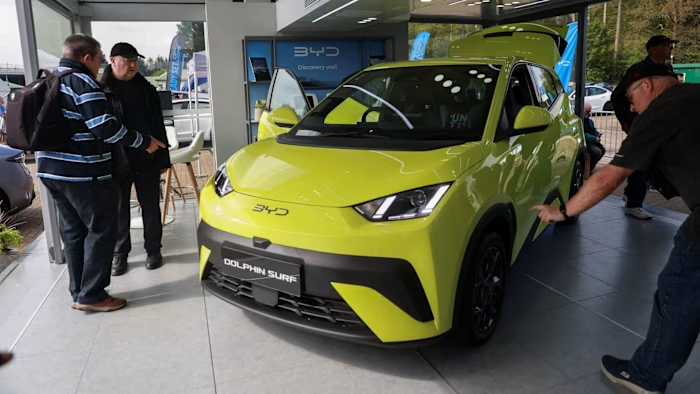
As the global automotive industry stands at a crossroads, Chinese electric vehicle manufacturer BYD is making a bold and confident declaration: its groundbreaking 'flash-charging' technology will be the critical weapon in capturing market share from traditional internal combustion engine (ICE) vehicles. As an automotive expert, I can say this development is one of the most significant shifts we've seen in the EV space in recent years.
What Is BYD's Flash-Charging Technology?
BYD's flash-charging system is engineered to deliver an extraordinary charging speed, allowing compatible electric vehicles to gain approximately 400 kilometres of range in just 5 minutes of charging. This is made possible through BYD's proprietary Super e-Platform, which supports a peak charging power of 1,000 kilowatts (1 megawatt). To put that into perspective, most current fast chargers operate at between 50 kW and 350 kW — BYD's system is, in practical terms, a quantum leap forward.
The company unveiled this technology alongside two new flagship models: the BYD Han L sedan and the BYD Tang L SUV, both of which are built on the Super e-Platform.
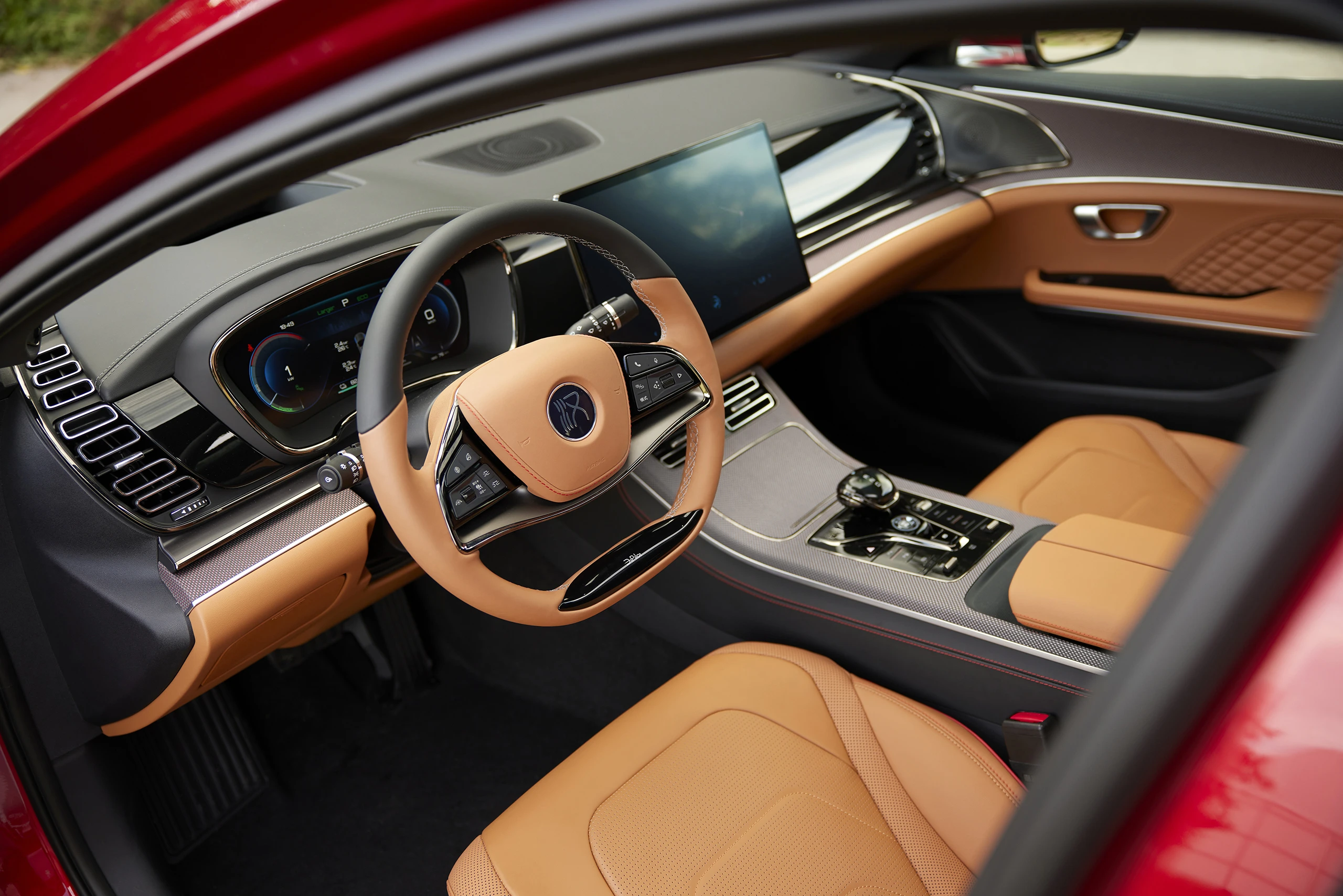
BYD Han L Sedan — one of the first models to feature the revolutionary flash-charging technology.
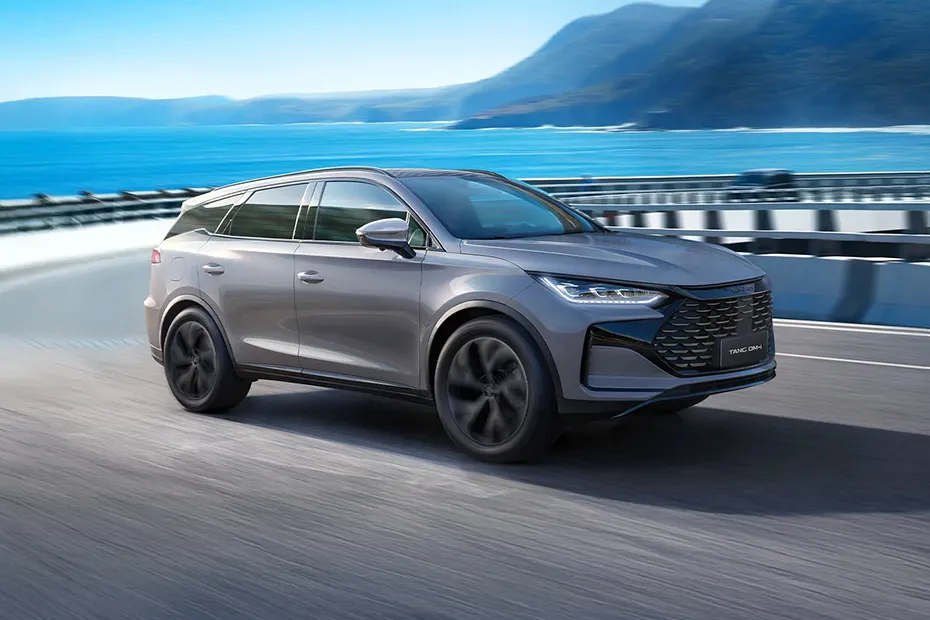
BYD Tang L SUV — built on the Super e-Platform, capable of accepting up to 1 megawatt of charging power.
Why This Matters: Tackling Range Anxiety Head-On
For years, the single biggest psychological barrier preventing mainstream consumers from switching to electric vehicles has been range anxiety — the fear of running out of battery charge before reaching a destination or a charger. Petrol cars, by contrast, can be refuelled in under two minutes at virtually any fuel station worldwide.
BYD's flash-charging proposition fundamentally disrupts this narrative. If an EV can be meaningfully recharged in the time it takes to grab a coffee, the last practical advantage of the petrol car evaporates. BYD's leadership has been explicit about this goal, with executives stating that flash-charging is designed specifically to eliminate the charging time concern and make EVs not just competitive with, but superior to, petrol vehicles in day-to-day usability.
The Infrastructure Challenge
However, as any seasoned automotive journalist will note, the technology itself is only half the equation. Delivering 1,000 kW of power requires an entirely new generation of charging infrastructure. BYD has acknowledged this challenge and has announced plans to roll out a dedicated network of flash-charging stations across China, with international expansion planned for key markets.
The company stated it plans to install over 4,000 flash-charging stations in China in the near term, a massive logistical and financial undertaking. Without this infrastructure, even the most advanced vehicle technology risks becoming a headline without real-world impact.
BYD's Broader Market Strategy
This flash-charging initiative is not occurring in isolation. BYD has already overtaken Tesla as the world's largest electric vehicle manufacturer by total sales volume, and the company is aggressively expanding into international markets including Europe, Southeast Asia, the Middle East, and increasingly, markets like Azerbaijan where consumer interest in EVs is growing.
BYD's strategy appears to be multi-pronged:
- Technology leadership — positioning itself as the innovator ahead of all competitors.
- Vertical integration — BYD manufactures its own batteries, semiconductors, and electric motors, giving it unparalleled cost and quality control.
- Pricing power — offering competitive pricing across multiple segments from budget to premium.
- Charging convenience — eliminating the last major consumer objection to EV ownership.
What Does This Mean for the Competition?
The implications for rival automakers — both EV-native brands and traditional manufacturers — are significant. Tesla's Supercharger network, currently one of the fastest available at up to 250 kW (V3) and 350 kW (V4), would be technically outpaced by BYD's 1,000 kW claim. Legacy manufacturers such as Volkswagen, Toyota, and Hyundai, still managing transitions between ICE and EV lineups, will need to accelerate their own charging technology roadmaps.
From my expert perspective, BYD is not simply announcing a product feature — it is redefining the benchmarks of the entire EV industry.
Expert Verdict: AutoTickers Analysis
BYD's flash-charging technology represents a genuine and meaningful advancement in electric vehicle capability. If the company can successfully deploy the required charging infrastructure at scale — and that remains the key 'if' — this technology has the genuine potential to shift consumer behaviour decisively away from petrol vehicles.
For markets like Azerbaijan, where EV adoption is still at an early stage, developments like BYD's flash-charging platform signal that the practical barriers to EV ownership are diminishing rapidly. Consumers and fleet operators alike should pay close attention: the era of the petrol car's dominance is being challenged more seriously than ever before.
As always, at AutoTickers, we will continue tracking BYD's progress on this technology and its potential availability in our region. The future of mobility is accelerating — and right now, BYD is behind the wheel.