Introduction
The Hyundai Tucson has long been one of the Korean automaker's crown jewels, consistently ranking among the top-selling compact SUVs globally. For 2026, Hyundai has fine-tuned and enhanced what was already an award-winning formula, delivering a vehicle that impresses on nearly every front — from its striking parametric design language to its tech-laden interior and efficient powertrains. As automotive experts at AutoTickers, we spent extensive time behind the wheel of the 2026 Hyundai Tucson to bring you this comprehensive review.
Exterior Design: Parametric Boldness Refined
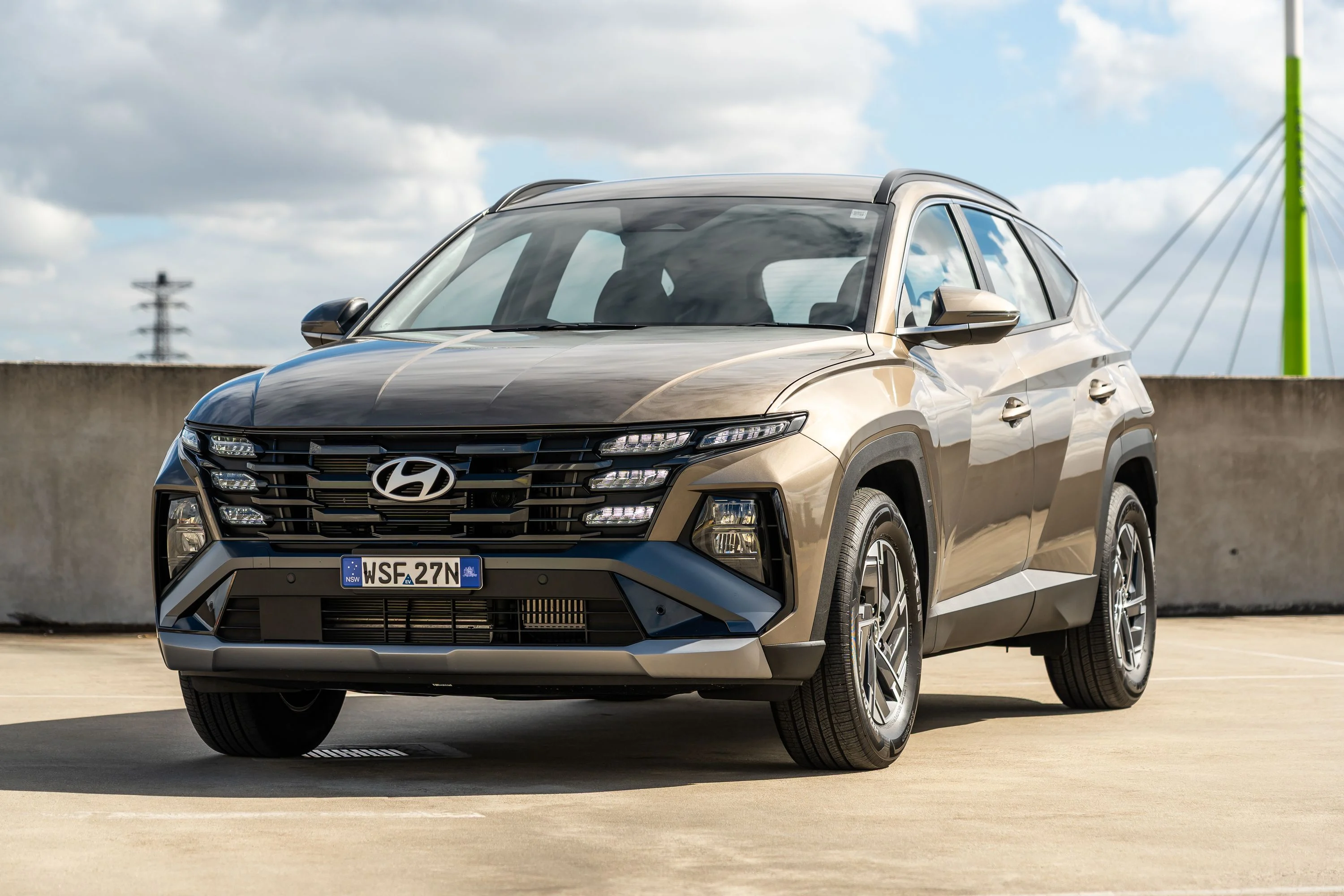
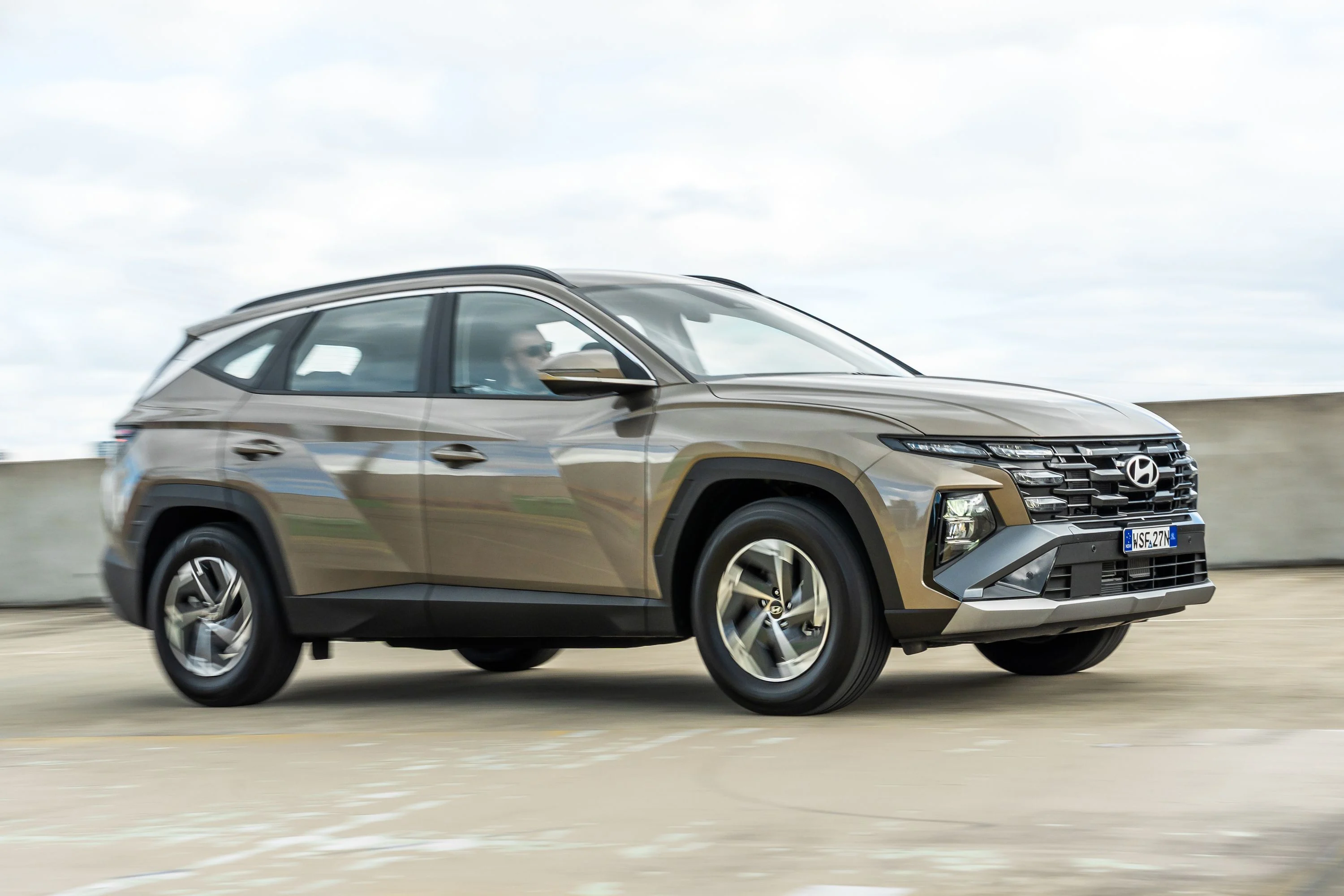
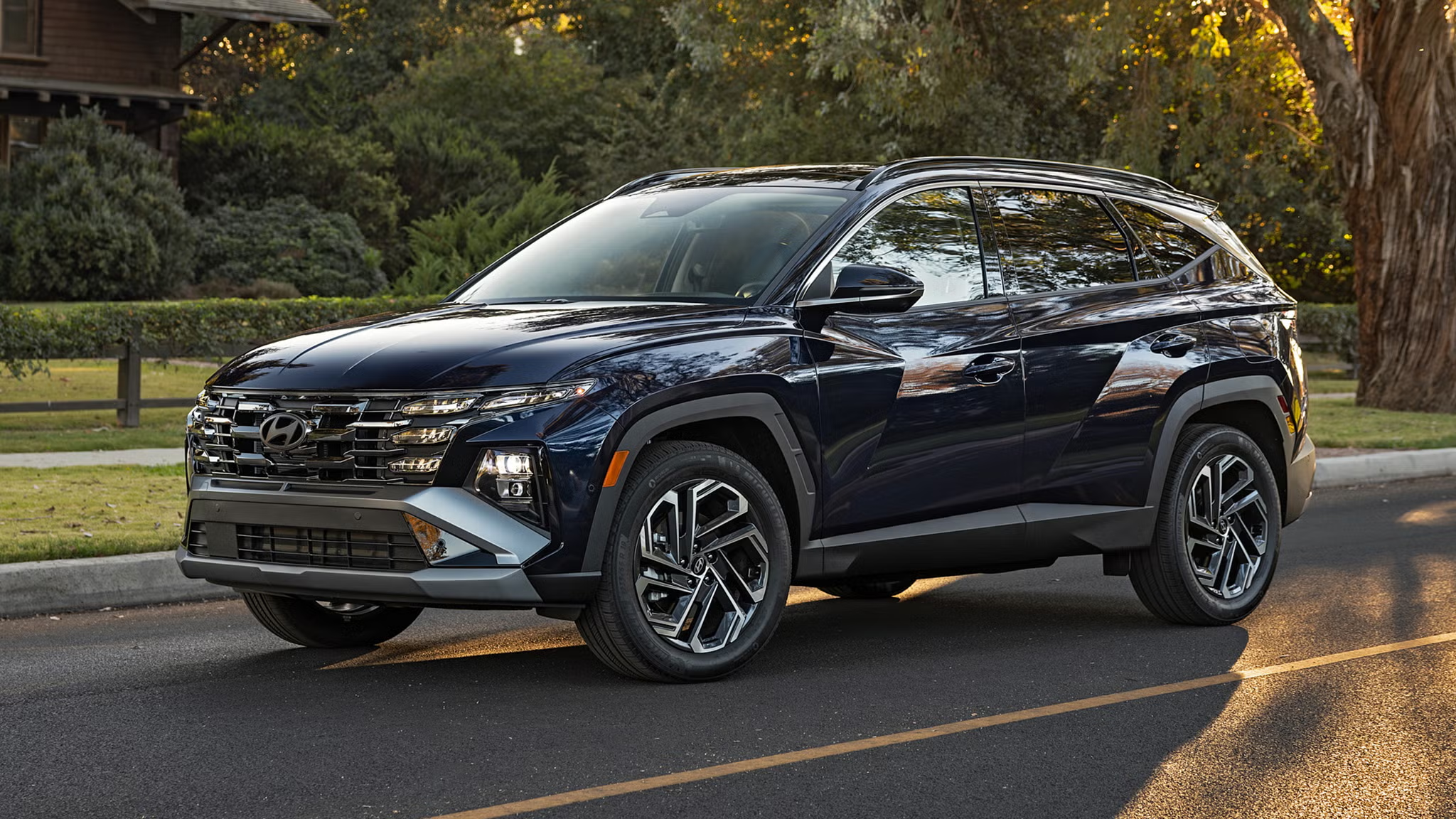
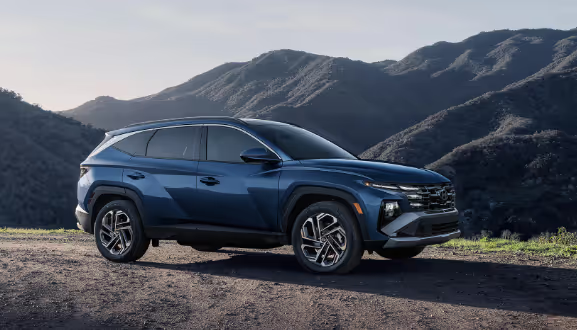
The 2026 Tucson continues Hyundai's bold parametric design philosophy, which first turned heads when the fifth-generation model debuted. The front fascia features Hyundai's signature parametric jewel hidden-light daytime running lights (DRLs) that seamlessly integrate into the sculpted hood, giving the Tucson a futuristic and premium appearance unlike any competitor in its class.
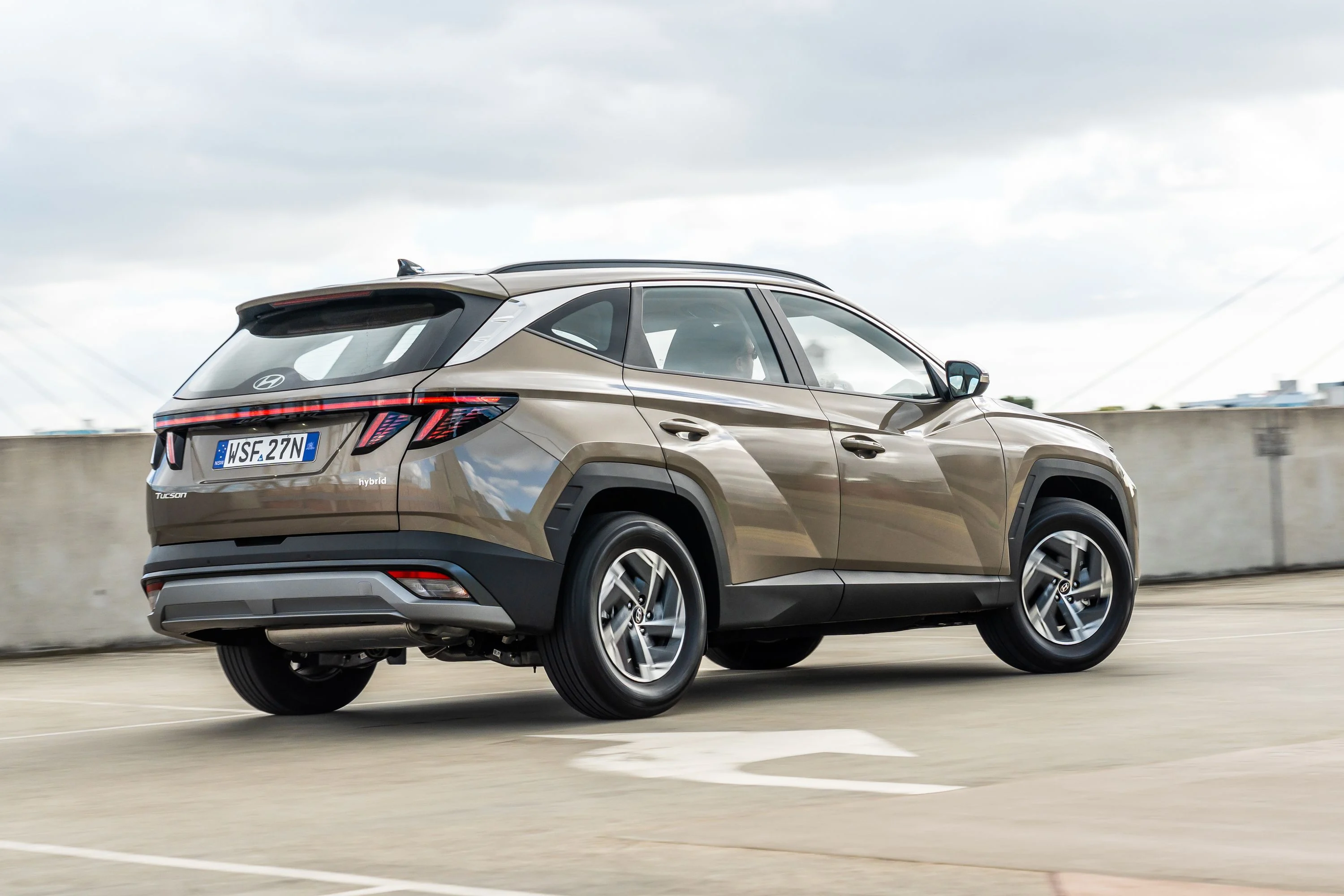
For 2026, Hyundai has refined the front bumper design with sharper creases, a wider lower air intake, and a redesigned skid plate that adds a more rugged aesthetic. The side profile reveals flowing character lines that run the length of the body, while the rear end gets updated taillights with a connected light bar design — a modern trend that Hyundai executes with exceptional precision. New exterior color options for 2026 include Abyss Black Pearl, Serenity White Pearl, Lucid Blue, and the popular Amazon Gray Metallic.
Interior: Premium Quality Meets Cutting-Edge Technology
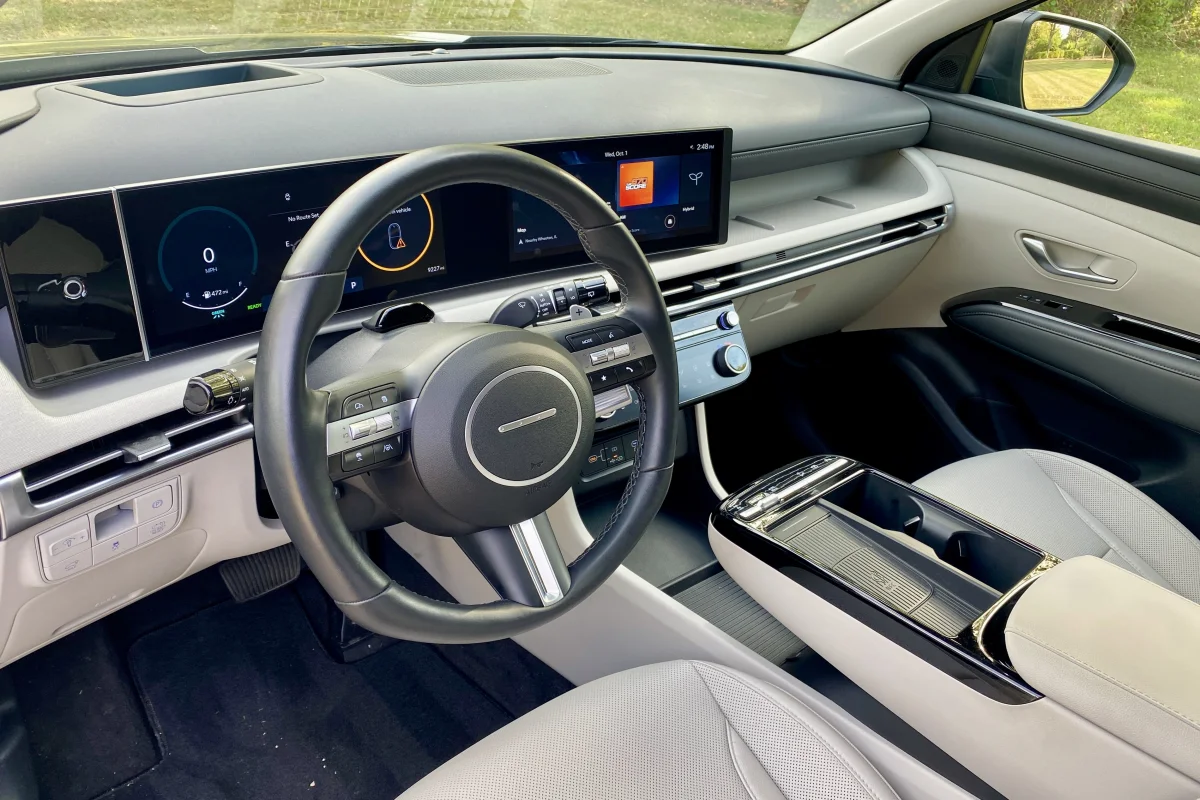
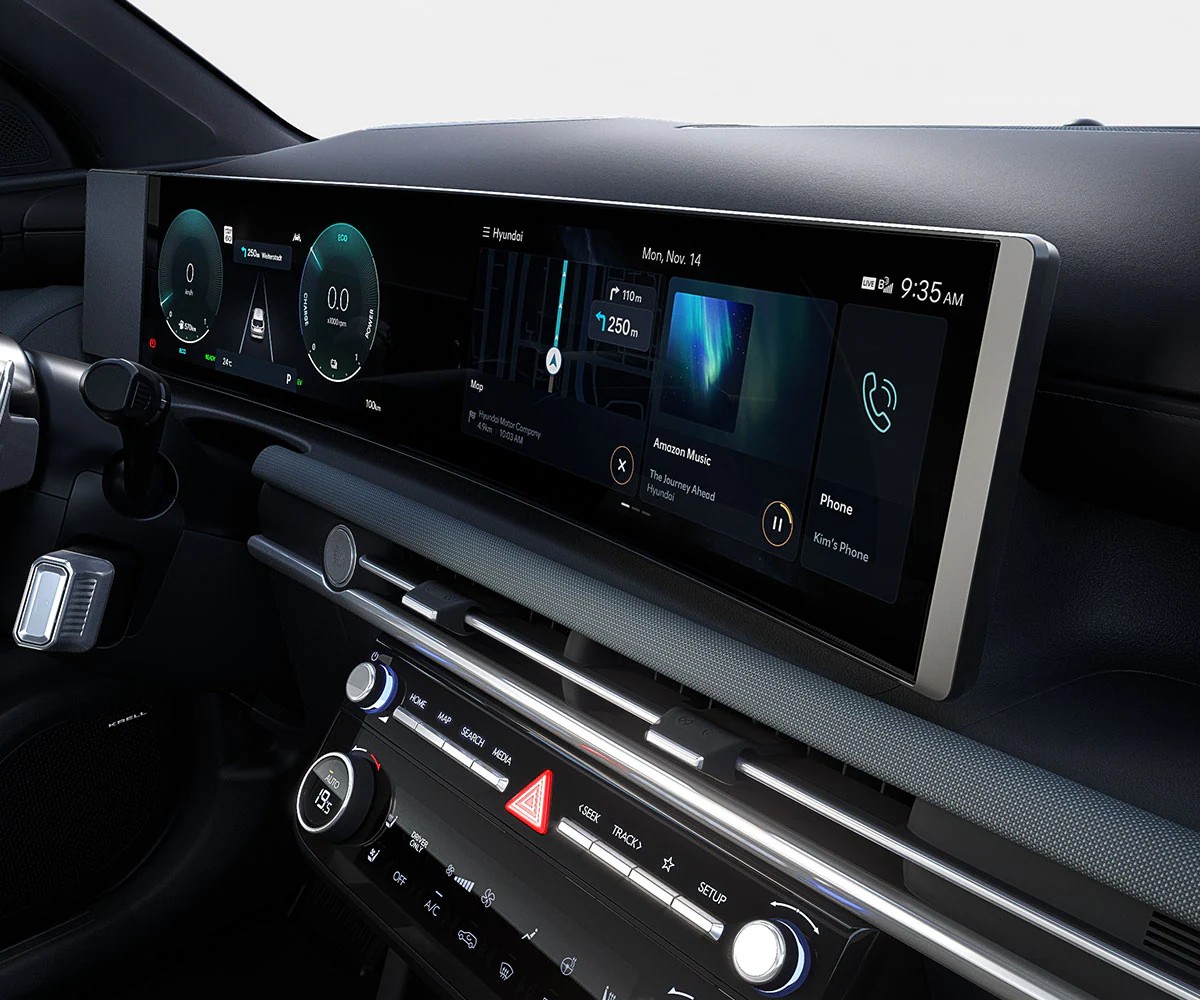
Step inside the 2026 Tucson and you are immediately greeted by an interior that punches well above its price class. The dashboard is dominated by a sweeping dual-screen setup featuring a 12.3-inch digital instrument cluster paired with a 12.3-inch touchscreen infotainment system. These screens are housed in a single curved panel that gives the cabin a modern, cohesive look reminiscent of luxury German brands.
Material quality has been noticeably improved for 2026, with soft-touch surfaces extending further down the door panels and center console. The seats are covered in a combination of premium leatherette and fabric on lower trims, while higher trims offer genuine leather upholstery with ventilation and heating functions. The Tucson's N Line variant adds sport-specific interior elements including bolstered sport seats, red accent stitching, and a flat-bottom steering wheel wrapped in perforated leather.
Rear passenger space is generously proportioned, offering ample legroom and headroom for adults. The panoramic sunroof, available on higher trim levels, floods the cabin with natural light, enhancing the sense of spaciousness. Cargo capacity stands at a competitive 38.7 cubic feet behind the rear seats, expanding to 74.8 cubic feet with the rear seats folded flat.
Infotainment and Connectivity
The 2026 Hyundai Tucson runs Hyundai's latest ccNC (Connected Car Navigation Cockpit) infotainment platform, which is notably faster and more intuitive compared to previous generations. The system supports wireless Apple CarPlay and Android Auto as standard, along with over-the-air (OTA) software updates, ensuring the vehicle's technology stays current throughout ownership.
A new feature for 2026 is the integrated ChatGPT-powered AI assistant, accessible via voice commands, which can answer natural language queries, provide vehicle information, and assist with navigation. Hyundai's BlueLink connected services have also been expanded, offering remote start, vehicle health monitoring, and geofencing capabilities through the dedicated smartphone app.
Powertrain Options: Something for Everyone
One of the Tucson's greatest strengths is the breadth of powertrain options available, catering to a wide spectrum of buyers.
2.5-Liter Naturally Aspirated Gasoline Engine
The base powertrain is a 2.5-liter Smartstream four-cylinder engine producing 187 horsepower and 178 lb-ft of torque, paired with an 8-speed automatic transmission. This engine delivers smooth, predictable performance suitable for everyday urban and highway driving. Front-wheel drive (FWD) is standard, with HTRAC all-wheel drive (AWD) available as an option.
1.6-Liter Turbocharged Hybrid (HEV)
The hybrid variant combines a 1.6-liter turbocharged four-cylinder engine with a 44.2 kW electric motor, delivering a combined system output of 230 horsepower. This powertrain is mated to a 6-speed wet dual-clutch transmission (DCT) and offers significantly improved fuel economy compared to the base engine — achieving approximately 38 mpg in combined city/highway driving. The hybrid system operates seamlessly, and the transition between electric and gasoline power is virtually imperceptible.
1.6-Liter Turbocharged Plug-In Hybrid (PHEV)
For those seeking greater electrification, the Plug-In Hybrid model features the same 1.6T engine paired with a larger 13.8 kWh battery pack and a more powerful 66.9 kW electric motor, producing a combined 261 horsepower. The PHEV variant offers an all-electric driving range of approximately 33 miles (EPA estimated), making it ideal for commuters who can charge at home and rely primarily on electric power for daily drives while retaining gasoline backup for longer trips. All-wheel drive is standard on PHEV models.
Driving Dynamics: Comfort and Confidence
Behind the wheel, the 2026 Tucson delivers a driving experience that balances comfort with genuine competence. The ride quality is one of the Tucson's standout attributes — the suspension has been tuned to absorb road imperfections smoothly without feeling overly soft or wallowy. Highway cruising is particularly refined, with minimal wind and road noise intruding into the cabin thanks to improved acoustic glass and enhanced body sealing.
Steering feel is accurate if not overly communicative, which is appropriate for a family-oriented SUV. Body roll in corners is well-managed, and the HTRAC AWD system provides confident all-weather capability. Sport mode sharpens throttle response and steering weight, making the Tucson feel noticeably more engaging without compromising ride quality significantly.
The N Line variant, while sharing the same powertrain as the standard Tucson, benefits from a sport-tuned suspension that lowers ride height by approximately 10mm and stiffens damping rates, resulting in crisper handling at the cost of marginally reduced ride comfort. Braking performance is strong, with confident pedal feel and short stopping distances.
Safety Features: Hyundai SmartSense Suite
Hyundai continues to lead the compact SUV segment in standard safety equipment. The 2026 Tucson comes equipped with the comprehensive Hyundai SmartSense suite as standard across all trim levels, which includes:
- Forward Collision-Avoidance Assist (FCA) with pedestrian, cyclist, and junction detection
- Lane Keeping Assist (LKA) and Lane Following Assist (LFA)
- Driver Attention Warning (DAW)
- Blind-Spot Collision Warning (BCW)
- Rear Cross-Traffic Collision Warning (RCCW)
- Smart Cruise Control with Stop & Go
- Highway Driving Assist (HDA)
- Rear Occupant Alert
- Safe Exit Assist
New for 2026 is an upgraded Multi-Collision Brake system that automatically applies brakes after an initial collision to prevent secondary impacts, and an expanded surround-view monitor system with improved resolution. The 2026 Tucson is expected to achieve top safety ratings from both NHTSA and IIHS, continuing a long tradition of safety excellence for this model.
Fuel Economy
Fuel efficiency varies significantly across the powertrain lineup. The base 2.5-liter FWD model achieves an EPA-estimated 26 mpg city and 33 mpg highway. The hybrid variant is significantly more efficient at 38 mpg combined, while the PHEV achieves an impressive equivalent efficiency when operating in electric mode. For buyers in Azerbaijan and similar markets where fuel costs are a consideration, the hybrid and PHEV options offer compelling long-term running cost advantages.
Trim Levels and Pricing
The 2026 Hyundai Tucson is available in SE, SEL, N Line, XRT, and Limited trim levels in the gasoline configuration. The Hybrid is offered in Blue, SEL, N Line, and Limited trims, while the PHEV comes in SEL and Limited variants. Pricing starts at approximately $29,100 for the base SE trim and climbs to around $46,000 for the fully loaded PHEV Limited with all-wheel drive.
The value proposition of the Tucson remains strong — the standard equipment list is generous even at entry-level trims, and the optional packages offer excellent bang for the buck compared to European competitors.
Verdict: AutoTickers Expert Assessment
The 2026 Hyundai Tucson is a comprehensive, well-executed compact SUV that excels in virtually every category that matters to buyers. Its striking design ensures it stands out in crowded parking lots, its technology-rich interior rivals vehicles costing significantly more, and the hybrid powertrain options make it one of the most efficient choices in the segment.
Minor criticisms include the DCT transmission in hybrid models that can occasionally feel abrupt at very low speeds, and the infotainment learning curve for new users. However, these are minor quibbles in an otherwise excellent package.
For buyers in Azerbaijan and across the Caucasus region, the Tucson represents exceptional value, combining Korean reliability, cutting-edge technology, and premium aesthetics at a competitive price point. We award the 2026 Hyundai Tucson a strong 9.0 out of 10.
Quick Specifications
- Engine Options: 2.5L NA, 1.6T Hybrid, 1.6T PHEV
- Power Output: 187 hp / 230 hp (HEV) / 261 hp (PHEV)
- Transmission: 8-speed automatic / 6-speed DCT
- Drivetrain: FWD / AWD
- Cargo Space: 38.7 cu ft (seats up) / 74.8 cu ft (seats down)
- Infotainment: Dual 12.3-inch screens, wireless CarPlay/Android Auto
- Starting Price: ~$29,100
- AutoTickers Rating: 9.0/10