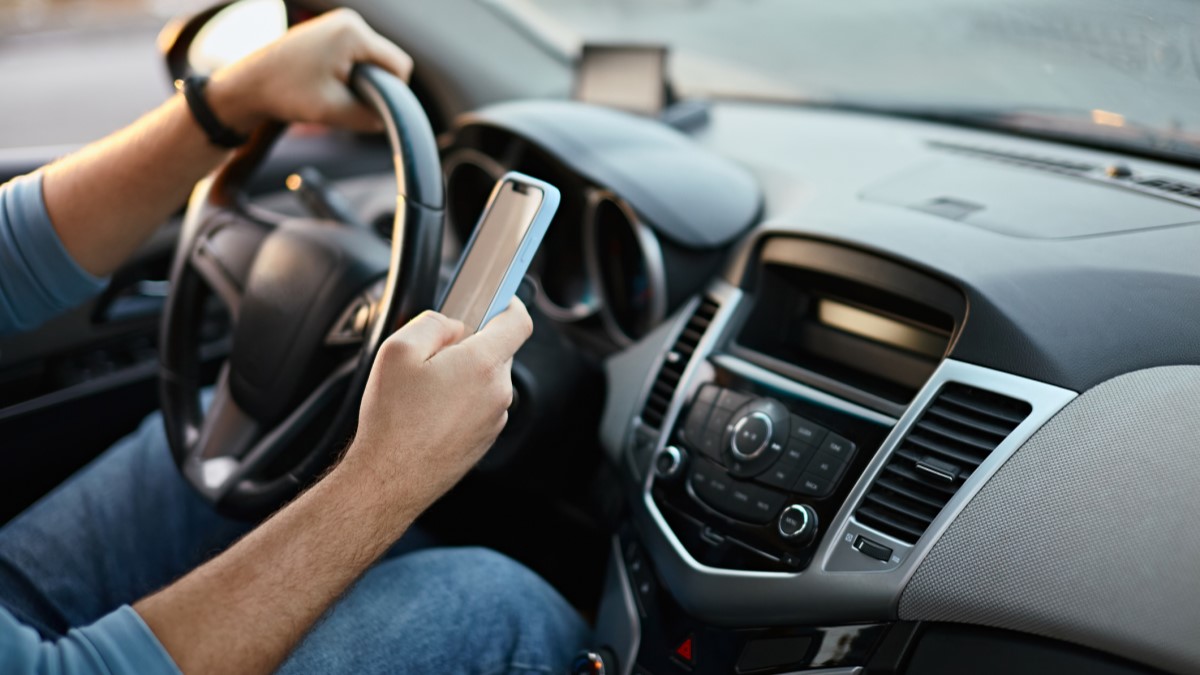
Speeders Love Using Their Phones: What the Study Reveals and Why It Matters for Baku Drivers
A major study reveals a dangerous connection between speeding and phone use behind the wheel. Drivers who speed are significantly more likely to use their phones while driving, creating a deadly combination on roads worldwide — including Baku's increasingly congested streets.
H
Hür Abbas Cəfəri
Avtomobil jurnalisti və nəqliyyat eksperti
## Speeders Love Using Their Phones: A Deep Dive into a Dangerous Habit
A groundbreaking study has shed light on one of the most alarming behavioral patterns seen on modern roads: drivers who speed are far more likely to use their phones while driving. This disturbing correlation paints a picture of a high-risk driver profile that endangers not only themselves but every other road user around them.
### What the Study Found
Research conducted by automotive and road safety analysts — including data referenced by Cars.com — examined the driving habits of thousands of motorists across multiple regions. The findings were stark and unambiguous: speeders, defined as drivers who regularly exceed posted speed limits, were significantly more prone to distracted driving behaviors, with smartphone use topping the list.
Key findings from the study include:
- **Speeders are 50% more likely** to use their phones while driving compared to drivers who obey speed limits.
- Drivers observed traveling 10 mph or more over the speed limit showed the highest rates of handheld phone use.
- Phone use while speeding was not limited to texting — it included browsing social media, making calls, watching videos, and using navigation apps without hands-free systems.
- The combination of speeding and phone distraction increases the risk of a fatal crash by more than **three times** compared to either behavior alone.
### Understanding the Psychology Behind the Behavior
Experts in driver psychology suggest that the same underlying traits that lead a driver to speed — a disregard for rules, overconfidence in their own abilities, sensation-seeking behavior, and a feeling of invulnerability — also make them more likely to engage in other risky behaviors such as phone use.
Dr. transportation behavioral analysts note that risk-tolerant drivers do not compartmentalize their habits. A person who feels comfortable pushing 120 km/h in a 60 km/h zone is psychologically primed to also feel comfortable scrolling through Instagram at the same time. This is known as **risk compensation** — where a driver's confidence in one area reduces their perceived danger in another.
Additionally, high-speed driving can create a false sense of control and adrenaline, which some drivers find reinforcing. Picking up a phone during these moments further feeds this psychological loop.
### The Hard Numbers: Distracted Driving and Speed as a Lethal Combination
According to global road safety organizations:
- Distracted driving, primarily caused by phone use, accounts for **approximately 25-30% of all road traffic fatalities** worldwide.
- Speeding is independently responsible for **about 30% of all fatal crashes**.
- When combined, these two factors create a compounding risk that dramatically reduces reaction time, increases stopping distances, and limits the driver's ability to respond to sudden hazards.
At 60 km/h, a driver looking at their phone for just 2 seconds travels approximately **33 meters completely blind**. At 100 km/h, that same 2-second glance covers over **55 meters** — more than half a football field — without the driver's eyes on the road.
### Baku Roads: A Growing Crisis
For drivers in Baku, Azerbaijan's capital and most densely populated city, these findings carry particular urgency. Baku has experienced rapid urbanization and a significant increase in the number of vehicles on its roads over the past two decades. Major arteries such as the Tbilisi Avenue (Tbilisi Prospekti), Heydar Aliyev Avenue, and the coastal boulevard see extremely high traffic volumes daily.
Traffic statistics from Azerbaijan's State Traffic Police (Dövlət Yol Polis Departamenti) indicate that road traffic accidents remain one of the leading causes of unnatural death in the country. While official data shows improvements following stricter enforcement campaigns, the underlying behavioral issues — speeding and phone use — remain widespread.
**Local observations and reports highlight:**
- A significant number of Baku drivers, particularly younger male drivers aged 18–35, are observed using smartphones while navigating high-speed sections of city roads and highways.
- The Baku-Sumgait highway and the ring road around Baku are particularly identified as zones where dangerous speeding combined with phone use is frequently reported.
- Ride-hailing and delivery drivers, who are under time pressure to complete trips and deliveries quickly, are disproportionately represented in phone-use-while-driving incidents in the city.
### Legal Framework in Azerbaijan
Azerbaijan has laws in place that prohibit the use of handheld mobile phones while driving. Under the Administrative Offenses Code of Azerbaijan, drivers caught using a handheld phone while driving face fines. Speeding violations are also subject to escalating penalties depending on how far over the speed limit the driver is traveling.
However, enforcement remains inconsistent, and many drivers — particularly those who already exhibit risk-tolerant behavior — do not consider the penalties sufficient deterrents. Road safety advocates in Azerbaijan have long called for:
- Increased use of automated speed and phone-detection cameras.
- Higher fines and points-based license penalty systems.
- Mandatory road safety education as part of ongoing driver licensing renewal.
- Public awareness campaigns targeting young drivers in urban centers like Baku, Ganja, and Sumgait.
### The Role of Technology: A Double-Edged Sword
Interestingly, the same smartphones that distract drivers also hold the potential to save lives. Modern smartphones and vehicles equipped with advanced driver-assistance systems (ADAS) can:
- Automatically activate **Do Not Disturb While Driving** modes that silence notifications when motion is detected.
- Use **Bluetooth and hands-free calling** systems that allow drivers to communicate without taking their eyes off the road.
- Provide **real-time speed limit alerts** through navigation apps such as Google Maps and Waze.
- Offer **collision warning systems** and automatic emergency braking (AEB) in newer vehicles.
However, technology is only effective when drivers choose to use these features. Awareness and willingness to adopt safe driving technologies remain low among high-risk driver demographics in Azerbaijan and across the broader region.
### What Drivers, Families, and Authorities Can Do
**For individual drivers:**
- Place your phone in a glove box or bag before starting the car to remove temptation.
- Use hands-free systems for calls and set navigation before you begin driving.
- Enable automatic "Do Not Disturb" mode on your smartphone.
- Remind yourself: no message, notification, or call is worth a human life.
**For families and communities:**
- Have open conversations with young and new drivers about the real risks of phone use and speeding.
- Lead by example — children and passengers notice and are influenced by driver behavior.
- Encourage the use of apps that disable phone functions while driving.
**For authorities and policymakers in Azerbaijan:**
- Invest in more sophisticated roadside detection technology.
- Launch sustained, emotionally resonant public awareness campaigns using local media, social platforms, and schools.
- Partner with telecommunications companies to promote safe-driving app features.
- Strengthen penalties to create genuine deterrence, not just symbolic fines.
### A Cultural Shift Is Needed
Ultimately, the study's message is clear: speeding and phone use are not isolated bad habits — they are expressions of a broader risk-tolerant mindset that must be addressed both individually and culturally. In Baku and across Azerbaijan, where driving culture has historically leaned toward assertive and speed-favoring behavior, this cultural shift is both necessary and urgent.
Every year, families lose loved ones on Azerbaijani roads in accidents that were entirely preventable. The data, the science, and the human stories all point to the same conclusion: putting down the phone and respecting speed limits are among the simplest, most powerful things any driver can do to protect themselves and others.
The road does not forgive carelessness. And at high speed, with a phone in hand, the margin for error disappears entirely.
Tags
Share